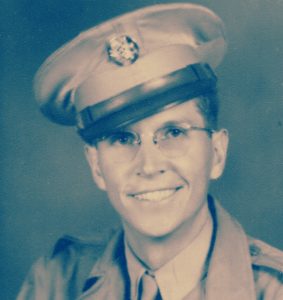
February 22 – March 25, 1944
Tuesday, February 22
After breakfast, we were loaded onto trucks and headed east. In the afternoon, we arrived at the Newport News dock. We were unloaded from the trucks and boarded a troop ship in the Newport News harbor.1 There seemed to be very little order on the ship, so Wimp Crider and I looked for and found the mess hall and were able to get food there.
The troop ship was very crowded. The bunks were close and six bunks deep. There was about 18 inches of space between the bunks. To get in my bunk, I had to just roll in. We tied our barracks bags to the post at the head of our bunks. I was assigned a third-layer bunk. There were two bunks below me and three bunks above me. My buddy Wimp Crider was in a bunk near me.

Wednesday-Monday, February 23-28
This morning (Wednesday) the ship moved out from the dock at Newport News and appeared to be headed east away from the shore, but when we were out of sight of land the ship turned sharply south. We were alone, no convoy. And after about two days, we were in warm waters and then the ship turned directly east. The troop ship would go one direction for seven minutes, and then turn sharply another direction for seven minutes always moving forward eastward. The wake of the ship looked somewhat like the rail fences we see in our countryside.
The zigzag motion of the ship was a defensive maneuver from enemy submarines. Usually, it would take an enemy submarine more than seven minutes to zero in on a ship and fire a torpedo. However, the zigzag motion of the ship made many of the troops seasick. You could tell this when you went to the latrine. I did not get sick but I lost most of my appetite.
The first day or two we would lay in our bunks except to go to the galley for food. But we found that officers would get soldiers laying on their bunks and put them on detail cleaning up the ship. So once we got into the warm waters, Wimp Crider, Leon Boatwright, and me would lay up on deck near one of the lifeboats. One of us would go to the galley and get as much food as he could (biscuits and any other food he could get and carry), and bring it up on deck where we were laying near a lifeboat. Also, I had a box of candy in my barracks bag that we ate on. But after about four days, someone stole the rest of my candy. We would go to our bunks at night. There were several water bags on the ship where we could fill our canteens.
After about four days, the latrine was so dirty (vomit on the floor) that we only went in there when we had to go. If we felt the need to piss, we would get on the ocean side of the lifeboat and piss in the ocean. The weather was very warm, and it was pleasant up on deck, but we had to take shelter three or four times when a rain cloud came up.
Tuesday, February 292
Terry is five months old today. I wish I could see and hold him.
This morning our ship pulled into a dock at Casablanca, North Africa. We disembarked from the ship and marched to a camp just outside of Casablanca. It was an American camp of tents, and there were several soldiers in each tent. We slept on cots. The food here was good, probably because I didn’t eat well on the ship. It was good to get good food again. I think I must have lost about 5 pounds on the ship.

We marched through Casablanca on the way to our camp. It appeared to be quite a large city, and there was quite a bit of activity on the streets. Some of the soldiers tried to get passes to visit the city, but I was not interested. We could see the city from our camp. I remembered that Humphrey Bogart once was in a movie called Casablanca.
On Saturday we were given a short arm inspection (sanitation) and were inspected for lice. We were also given a chance to report any other medical condition that we might have.
Wednesday, March 1
I often think of Nettie and Terry and home. I haven’t received any mail for several days, but I remembered that today is my mother’s birthday. Early this morning we had breakfast, and then we were marched to the Casablanca train station and were loaded into boxcars called a “forty and eight.” I learned later that these forty and eight boxcars were used by the Arabs to carry forty men and eight horses.

The boxcars had no bathroom facilities. When we had to piss we simply pissed out the side of the boxcar. There was no place to relieve ourselves. But we were in large mountains and the train moved fast downhill, but barely moved uphill. We had one 20-minute pit stop between mountains. It wasn’t enough. A few of the men took advantage of the slow periods and jumped off the train, quickly relieved themselves, and ran back up to the train. I did not.
In one corner of our boxcar, there was a stack of K-ration cases and a water bag with a sergeant guarding the K-rations.3 At meal time we were given a box of K-rations.
At night there was not room enough for everyone to lay down in the boxcar. I tried to lay down, but it was so uncomfortable with soldiers laying against me that I got up. After considering the situation, I got my shelter half (a shelter half is half of a tent that we all had) out of my pack, and tied the ends of it to a ring that was on each side of the boxcar and made myself a hammock. I eased myself very gently onto my self made hammock and lay still all night. I was surprised that the self made hammock did not fall, but it didn’t fall. With the rocking of the train I slept good. The next morning I took down my shelter half and put it back in my field pack.
Thursday, March 2
We rode all night, but about 10 am the train made another 20-minute pit stop at a low place in the mountains, and another 20-minute pitstop during the evening, and we made good use of it to relieve ourselves. All of us kept toilet paper in our helmet liners. We were issued some K-rations and filled our canteens with water while we were stopped.
Friday, March 3
Over in the afternoon, we pulled into the Oran, North Africa train station. Most of us left the train carrying our field pack hand shovel, moved a few feet from the train, dug a hole, and relieved ourselves in it. As soon as I was comfortable, I noticed that we were next to a very busy street. A few people looked at us, but most didn’t pay any attention to us. Our officers did not say anything about our relieving ourselves in a public place. I didn’t notice, but they [were] probably doing the same thing.
After about an hour, we were marched to our tent camp near the city. Everywhere we went, we marched. We were assigned to our tents and went to mess hall for supper.
Saturday-Tuesday, March 4-7
We were only at this camp for four days, and during this time we were lectured about what we could say in our letters and had lectures about why we fight. We had some exercise periods but did little else, However, we could go on sick call, and we had the usual short arm inspection (sanitation). We had good food, but the nights were chilly. We slept on cots. This evening we were told to be ready to move out tomorrow.
Wednesday, March 8
After breakfast this morning, we were marched out, carrying all of our clothes and other stuff in our barracks bags on our backs. We were marched down to the Oran dock and were loaded on a British ship. Many of my training friends were with us. Wimp Crider and Leon Boatwright have been near me most of the time and were bunked near me on the British ship.
On the British ship, things were somewhat different from the American ships. And we always have tea at 4 pm. The food was good but somewhat different from American. The British sailors thought we would be going to Italy. They had been carrying supplies to British troops in Italy. They said that there had been much fighting in Italy.
Thursday-Sunday, March 9-12
During the night we moved out into the waters of the Mediterranean Sea. I could tell we had moved out on water before I got up. We were only allowed to go to the mess hall in groups as we were told.
The British sailors were very friendly and were willing to talk to us. And we always had tea at 4 pm. This did not appear to be a big ship, but it sailed smoothly. I enjoyed the ride.
Monday, March 13
This morning we pulled into the dock at Naples, Italy. There was some time before we left the ship. I noticed that the water around the ship was dirty with garbage in it, and the countryside shows many signs of the war. A lot of the houses were damaged in the fighting. After a couple of hours, we disembarked and were marched to another camp.
This was also a camp of tents, and we slept on cots. It was an army replacement depot. We were to be assigned to companies that had lost men in battle. The 34th Infantry Division had fought in North Africa, Sicily, and in southern Italy. They had recently lost several men in the fighting in central Italy.
Tonight, after supper, I ran into Jesse Smith from Siler City, NC. He recognized me first, and we talked some about our homes. He has a brother named J.T. Smith in Ramseur that I have known for years.
Tuesday, March 14
We haven’t done much today. We have been assigned to our cots, and many of us are writing letters. Wimp, Boatwright, and several of my basic training friends are here.
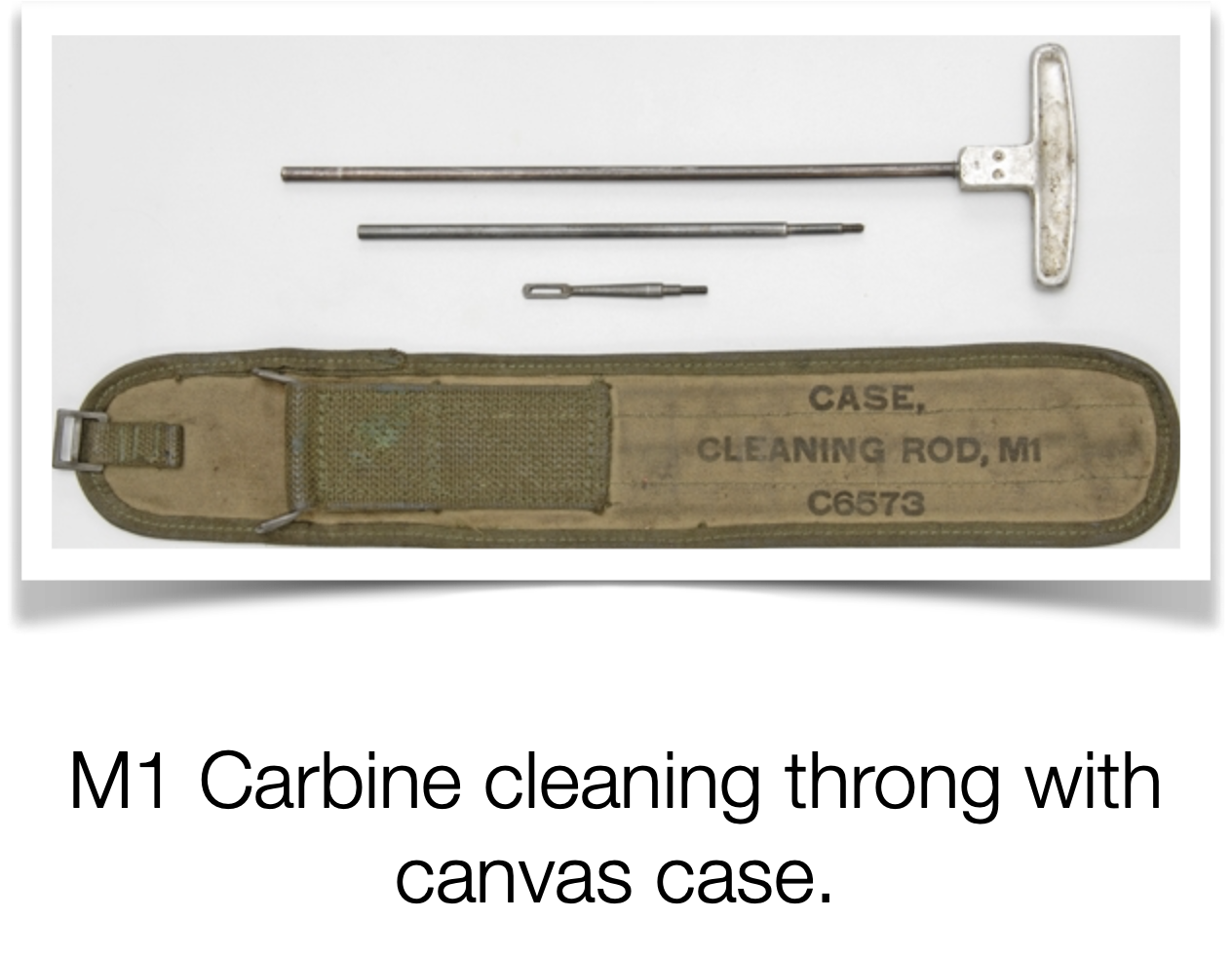
The new replacement people were issued M1 rifles today and, as expected, we were marched to the local firing range. The M1 rifles issued to us were used rifles, probably had been recovered from some battlefield. My M1 rifle showed that it had been used and there was no throng cleaning case in the stock of the rifle where it should have been. It fired alright.
We can see Mt. Vesuvius from here. It is erupting and looks to be mostly smoke in the daytime, but it appears to be a ball of fire at night. It looks like the whole mountain is on fire.

I still worry about Nettie and Terry. I feel bad about not being there to see Terry grow. I feel sure that Terry and I are missing some bonding that probably will affect both of us all of our lives. Nettie writes and sends pictures, but I miss them. Soldiers are not the only ones that suffer and lose in a war.
Wednesday-Thursday, March 15-16
This morning after breakfast another soldier and I were chosen to go guard a bridge in the German Gustav line that the Germans failed to destroy when they were recently driven north out of the area. The Americans thought the Germans might come back and blow up the bridge so the Americans could not use it. We were driven in a jeep over to the bridge across a river in central Italy, and given two days of K-rations and water. We were instructed that one of us was to walk across the bridge every hour day and night. We were told that we would be relieved in 48 hours and they left.4

My partner and I decided to each take 4-hour turns in walking across the bridge. This would give each of us time to sleep some. I volunteered to take the first 4-hour turn walking across the bridge.
The American idea was if the Germans returned they would think the bridge was heavily guarded and go away. However, they could have easily picked us off while we were walking across the bridge. While walking across the bridge I felt like 10 thousand eyes were watching me, especially at night.
Friday, March 17
The Germans did not return and this morning about 10 am a jeep came, left two more soldiers at the bridge and took us back to the replacement depot. Back at the replacement depot, I learned that I had been assigned to Company I, 133rd Regiment, 34th Infantry Division. The only other one that I knew assigned to I Company was Jesse Smith, and he was in another platoon. Wimp Crider, Leon Boatwright, and others I knew were assigned to other companies.
This afternoon we were told which squad we were in. The squads were made with the tallest in the front. I was second man in my squad.
This company had fought in North Africa, Sicily, and Italy, and many of the older members were battle-hardened and did not want to become too friendly with us rookies. They said that in combat some are going to be killed, and it hurts worse when it is your close friend. Just do your job, we were told.

Saturday, March 18
This morning I was awakened at the crack of daylight by loud whistles blowing and someone shouting “UP-UP”, “CHOP-CHOP”, “OFF AND ON” (meaning off your cot and on your feet. “FALL OUT IN FIVE MINUTES.” For a moment I thought I was back in boot camp. I hurried and put on my clothes and shoes, and went to the cleared space in front of our tent. There was some confusion, but the older ones knew which squads to go to. We had to dress right and sound off when our name was called. Some would say present or here, or just Yo.
After all had answered, the lieutenant turned around and faced the company commander, saluted and said “All present and accounted for.” The CO returned the salute and said “Who is it that is accounted for?” The platoon lieutenant again saluted the CO and said “All present, Sir.”
This evening I cleaned my used M1 rifle. It showed that it was used, and did not have a cleaning throng case in the rifle stock as it should have had. I cleaned it up the best I could and borrowed Friedlander’s throng case to clean the inside of the rifle barrel.
We were dismissed for chow. And after chow, we were assembled again and marched in close order drill for about 2 hours in a cleared area.
Sunday, March 19
We didn’t do much today. I wrote some letters and made sure I didn’t miss any meals. While I was writing an Italian boy about 10 years old came up near me and we tried to talk to each other, but he didn’t speak English and I didn’t speak Italian. After a while, we both got tickled. He was very friendly. We talked with the fellows a lot, and I got to know some of the fellows in my company. I saw Jesse Smith at dinner and we talked. Jesse is in my company but is in another platoon. Usually, four platoons make up a company.
In my squad, the man behind me is named Bill Freidlander and he is from Gary, Indiana.5 He worked in a steel mill there. He was with the company in North Africa, Sicily, and in Italy, and has seen much action. He is very friendly to me and I like him.
Monday-Wednesday, March 20-22
During the days we marched a lot, did a lot of close-order drill. But we had quite alot of free time. I tried to write letters each day. I see Jesse Smith almost every day, and we talk a lot. He is very nice and we have become good friends. Also, I talk with Bill Friedlander every day, and he doesn’t seem to mind that I am a rookie. When we are having close-order drill, he is right behind me in the squad. He advises me a lot.
Some of the fellows say that there is an Italian family nearby that will wash and clean our clothes. You take them down there one day and go get them the next day. We have to pay a small amount for them, but it is worth it. Friedlander and I took some of our dirty clothes down there this evening. The rumor is that we will be moving out in a day or two.
Thursday, March 23
This morning after breakfast we had some marching and close order drill. After dinner, we had mostly free time. This evening Bill and I went down to the Italian house to get our clothes. We gave him $5.00 and a pack of American cigarettes. He shouted for his wife and a daughter to bring us some wine. She brought each of us a glass of wine. The daughter looked to be about 17 or 18 years old, had black hair, and was very pretty. We drank the wine slowly, and it was good. When our glasses were about empty, he shouted for the ladies to bring more wine, but we declined, got our clothes, and went back to our camp.
Friday, March 24
Bill Friedlander and I went together over to the chow tent for breakfast. I am getting used to powdered eggs and spam. Usually, we also have some kind of fruit for breakfast. We move along a line of pots and kettles, and someone on the line puts food in our mess kits. and we go to the mess tent to eat. Anything we have left we throw in the garbage pit. It was heartbreaking to see women, some with small children, go into the garbage pit for bits of bread and food to eat. Many of our soldiers, as well as myself, would get more food, especially bread, than we wanted so we could give the pit ladies some whole pieces of bread. When we had it we would give them an apple or other fruit that we had been given at the mess tent.
After breakfast, we did some exercise this morning, and some close-order drill this afternoon. We had some time in our tents and we talked a lot, mostly about our families and where we were going. It was clear that we would soon be involved in the fighting in Italy, probably at Anzio.
Just before time for supper chow, we heard a gunshot in a tent near us. Bill and I rushed over to the tent where the gun shot occurred, and a soldier was laying on his cot with blood coming from both feet. He was trembling, and we found that he had shot himself in the top of both feet. He had placed one foot on top of the other and shot himself through both feet with his M1 rifle. Several soldiers gathered around the tent, and soon the medics came up and got him.
Saturday, March 25
This morning after breakfast chow, we marched some in close order drill for about 3 hours. This afternoon we had a lecture about what we should and should not do if we were captured by the enemy. We were instructed to just give our name, rank, and serial number to the enemy.
This afternoon we had some group exercise. This evening we were told to get our equipment ready to move out tomorrow. At this point, we believed that we would be going to the American beachhead at Anzio. I had seen in a copy of the army newspaper Stars and Stripes that there had been heavy fighting at the Anzio beachhead. Anzio was about 20 miles north of Naples.6
Sunday, March 26
After breakfast, we were issued 3 boxes of K-rations and water for our canteens. and told to get our equipment ready (except for my rifle, all my equipment was in my back field pack) to move out. We moved in line slowly toward the Naples harbor. Some small Italian kids came along our line, and they were given candy and other small items by the soldiers. I did not have any candy. A few of the soldiers gave some of the larger boys money to carry their field pack for them.
As we approached the Naples harbor I could see that there were several ships there. The harbor water was as dirty as it was a week ago when we came in. The soldier line was entering the ships on gangplanks. When I got there, we were going into an LST-type British ship. The ship was loaded with British trucks loaded with equipment for the British soldiers fighting in Italy.
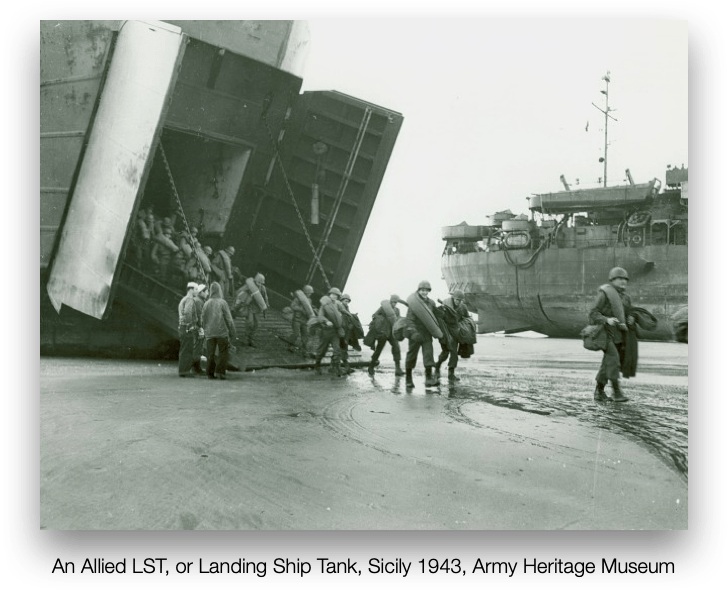
There were no quarters for us. We lay on the deck among the British trucks. This was not bad until over in the evening when the ocean spray that was coming over the deck became cool. It was uncomfortable, and after a while Bill Friedlander said, “Let’s see what’s in those trucks, maybe we can find some space in one of them.” We moved along the back of the British trucks lifting the back flaps and looked in. They were all loaded with equipment, but we finally found a truck that had flat cases in it, and there were about 18 inches of crawl space between the top cases and the top canvas of the truck. There was no room for our field packs, so we buckled them to a wheel of the truck and crawled onto the cases.
We still had our M1 rifles. We were very comfortable. After a while we heard someone trying to open one of the cases on our truck. It waked us up. I said, “What are you guys doing?” One guy said, “Do you know what is in those cases?” “No,” I said. “Well they are loaded with British beer, and we want some of it.” Bill Friedlander said, “Get out of here. Leave that beer alone. If you don’t, I will report you.” They left. but we had to run guys off two more times before we docked the next day.
Next: The Stalemate at Anzio >>
Footnotes:
- The ship was the General H. W. Butner, and carried over 5000 replacement soldiers and officers. Commissioned in January 1944, This was the ship’s first troop transport. ↩︎
- 1944 was a leap year. ↩︎
- A military ration consisting of three separately boxed meal units. ↩︎
- After an offensive to drive Allied troops from Anzio failed in early March, the Germans went on the defensive, incapable of mounting any further serious offensive action. A three-month lull followed with both armies waiting out the winter and focusing on defending their positions. ↩︎
- Pvt. William Carl Friedlander was born in Illinois, but close to Gary, IN. Dad said on several occasions he appeared to have some heat damage on his face, perhaps from working around steel, Friedlander’s draft registration notes complexion as “ruddy,” and his employer as Git Brothers Mfg., a fabricator of parts for the auto industry. Circumstantial evidence is strong that this is the Bill Friedlander dad befriended. ↩︎
- It’s actually 140 miles from Naples to Anzio. ↩︎
 Diary of an Infantryman