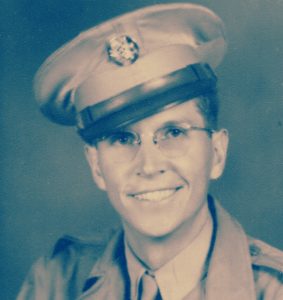
March 27 – May 22, 1944
Monday, March 27
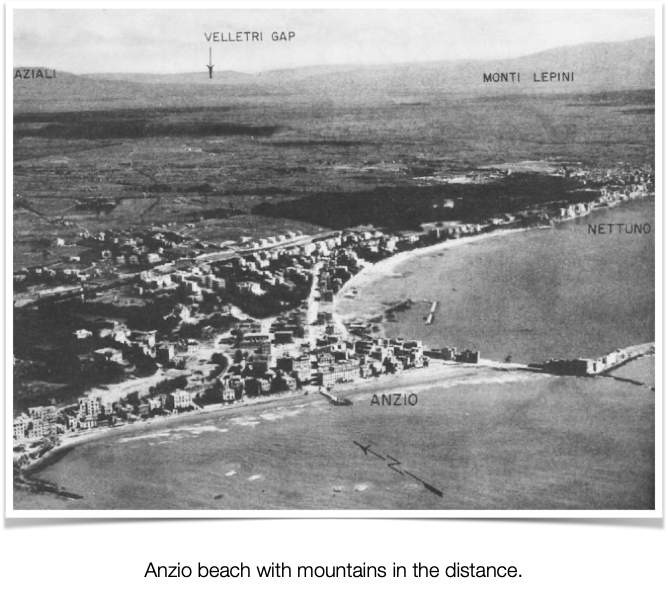
This morning at daylight, Bill Friedlander and I woke up and got off the truck, recovered our field packs, and watched as we were approaching the harbor at Anzio. Some of the other ships were unloading first. About noon our ship docked, and we walked off the ship on the LST ramp and onto the beach. We walked single file through Anzio in a long line, and up ahead I noticed what looked like some fireworks. Some enemy shells had come in and some of our soldiers were hit.
As we walked off the ship, over to our right there was a line of American big guns firing towards the mountains where the Germans were. Our Captain Craven led us single file right in front of the big American guns firing. We were in no danger. They were firing over our heads, but the noise was terrible. Since some of us were rookies, Captain Craven wanted us to get a feel of the war. And he was successful.
We moved away from the beach area some distance to a long sand dune, and there we were to have a worship service. The Protestants were in one area and the Catholics in another nearby area. The chaplain announced where each service was and several soldiers moved to their group. I remember that the chaplain said Christ was a happy man, and that we should be happy. We were going to move to the front line after dark and relieve the 3rd Division that had been fighting there for several weeks. And some us would not be coming back. And we should be happy????
After the worship service, our Captain Craven assembled I Company and told us we would be moving up to the front lines after dark. He said that there will be difficult times ahead, but he expected each of us to do our jobs. There may be long marches, but there will be no falling out. If the man in front of you falls down, just walk on and over him and keep walking. It sounded tough, but combat is tough.
We were issued some K-rations and filled our canteens with water, and after dark, we were loaded on some trucks with only parking lights on, and carried about 10 miles toward the German lines. I was told that the German lines were less than 10 miles away. We unloaded and started walking about a mile to the 3rd Division line. We hadn’t gone far until German artillery shells became coming in. The other soldiers quickly moved to the side ditch, but I was observing the fireworks, so Bill Friedlander grabbed me by the waist and dragged me into the side ditch. Soon the shells were landing close. But no one was hit near me.
The 3rd Division boys were very glad to see us and happy to be relieved from combat. Some of them talked to us and told us the fighting had been very heavy, and they had lost several men. But the battle had turned into a stalemate with each side seeking an advantage. The 3rd Division foxholes were covered with sandbags, but some had water in them but were fairly safe from artillery shells unless it was a direct hit.
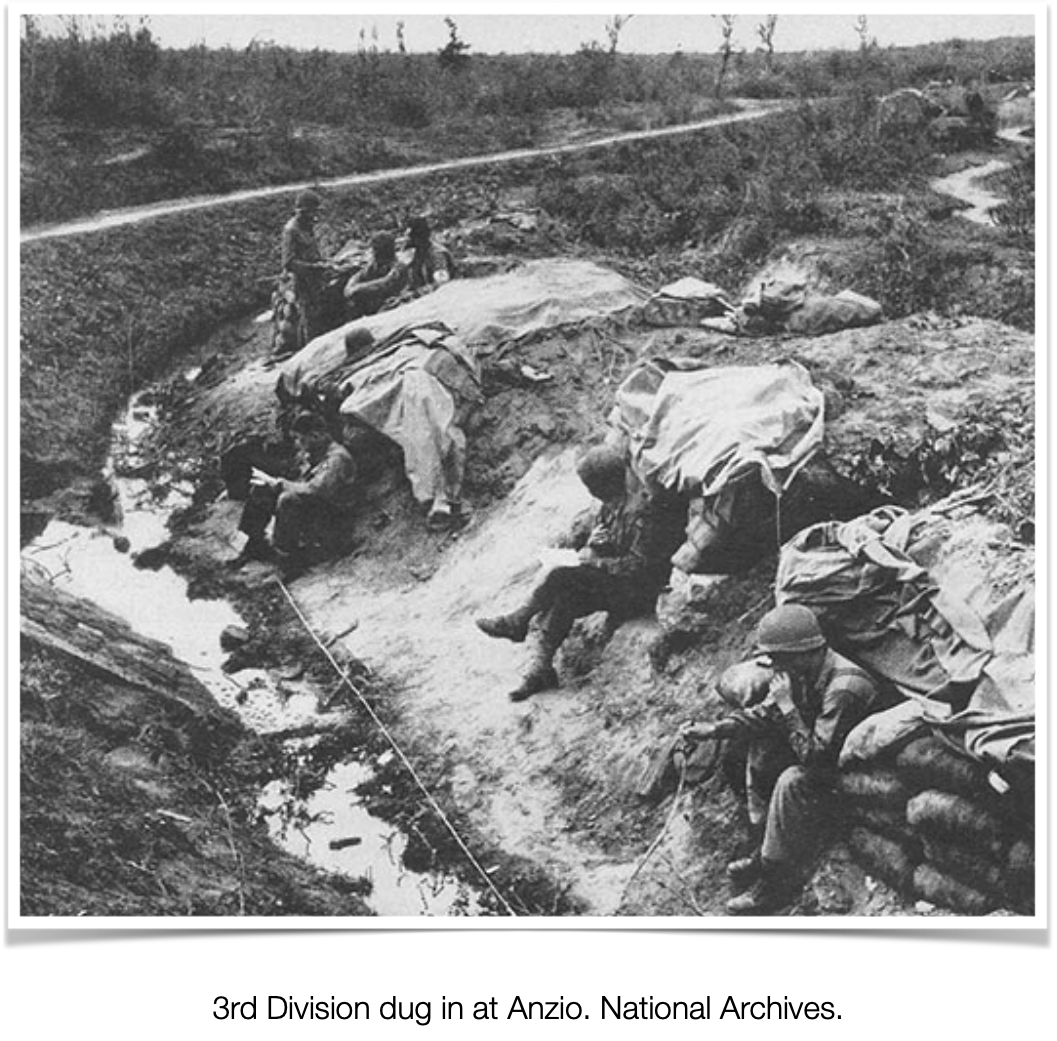
Friedlander was in a foxhole nearby, but I was with a boy named Dave Reynolds. He was from Pulasky [Pulaski] Va., and had worked in a silk mill there. When I worked at Bossong Hosiery, we got some of our yarn from Pulaski, Va.1
Soon after we got into our foxholes, the sergeant came by and put both Reynolds and me on guard duty. German artillery came in several times during the night, but no one near me was hit. We took turns sleeping, and at daylight, we went back to our home foxhole.
Tuesday, March 28
We learned that the Germans had a line about a mile or less from us, and held the high ground. We were not able to move around outside in the daylight. The Germans held the mountains, and we had the low ground near the mountains.
We stayed in our foxholes during the day, and not much happened in the daytime except some German artillery and mortar shells would come in. We were reasonably safe in our foxhole. Reynolds and I talked alot, and played some penny ante blackjack. At night we would usually be assigned one of four things, stand guard, go out on a listening post, go on patrol, or carry water cans and ration boxes or ammunition cases about a mile from where the trucks left it.
The listening post meant that usually two people would be assigned to go out in front of our line at night and to let us know if and when the Germans attacked. The trucks at night, with dim lights, would only come up as far as about a mile from our line to bring rations and ammunition. The trucks do not run in the daytime as the Germans will be able to see them and hit them with artillery and mortars. And we found out that the Germans had the intersections and parts of the roads zeroed in, and would throw artillery, mortar shells, and machine gun fire in several times during the night. Also, some Jerries had machine guns zeroed in on the roads. We had to carry everything, water and ammunition, on our backs at night from where the trucks left it to our lines.
Wednesday, March 29
I haven’t received any mail since I left the States. I just haven’t been in one place long enough. I am sure the mail will catch up with me soon. I am sure we will get our mail here at the front. It will probably be brought up by the ration and ammunition truck. I wrote Nettie today and asked her again to send me a radium dial watch.2 My watch got broke.
I am guarding a road tonight. It is near our lines, and I am laying in the ditch with my M1 rifle. Sergeant Garthwaite gave me the password for tonight and told me to shoot anyone that came up that road and didn’t know the password. Only Americans came up the road, and they all knew the password. But I made all of them halt and give the password before I let them pass.
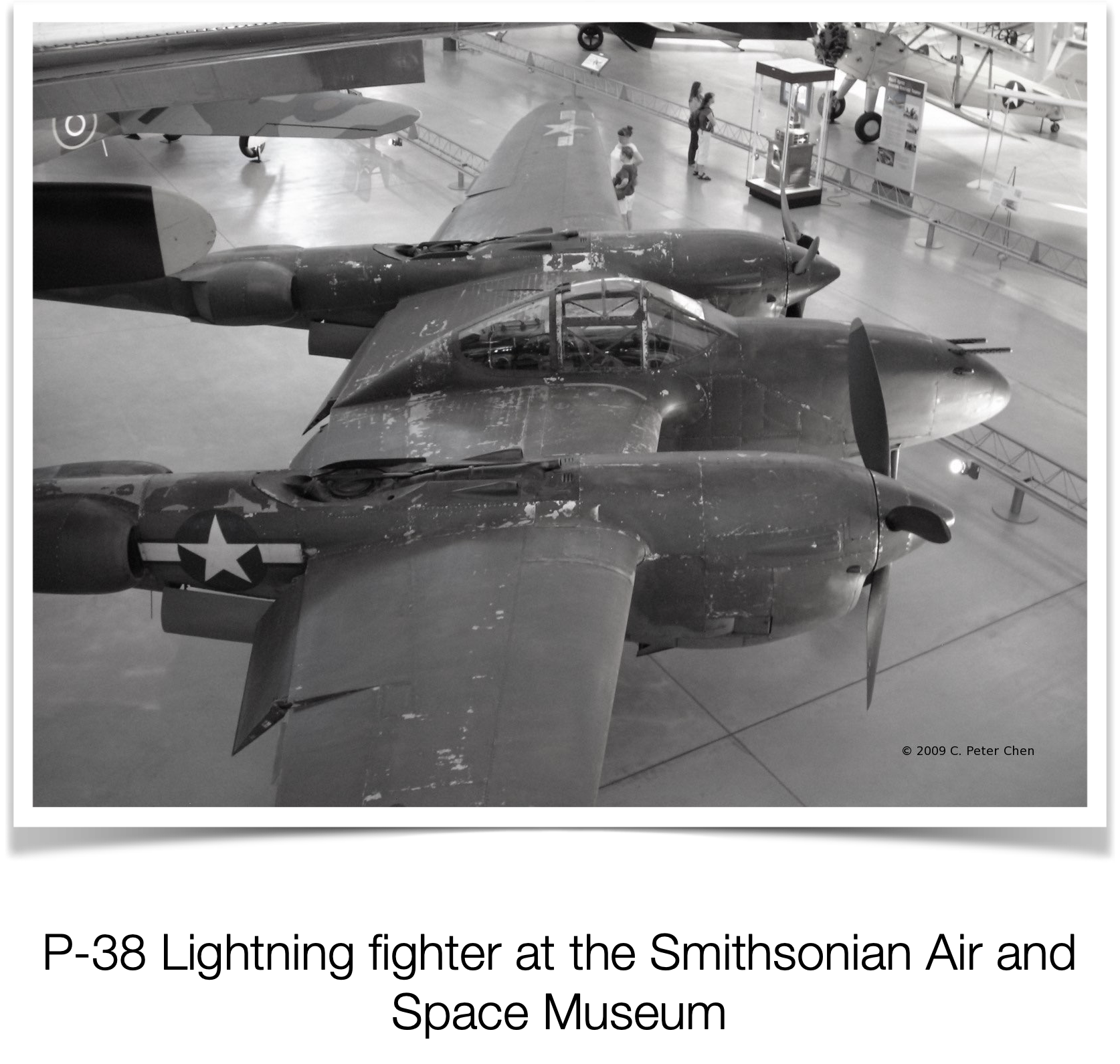
We get much artillery and mortar shells each night, and in the daytime, I lay outside and watch our P-38 fighter planes fly.3 They are often fired on by German Ack Ack guns.4
I got seven letters from Nettie tonight with some pictures of Terry.
Thursday, March 30
I received three more letters from home tonight.
The foxhole that Reynolds and I are in is covered with sandbags with the back end open. We lay our rifles on top of the fox hole in the daytime. We usually lay our field pack and gas mask out too if it isn’t raining.
I had to help carry water up from the supply truck tonight. The water cans had ten gallons of water in them and were quite heavy. At one intersection I came under machine gun fire. I could hear it plopping in the field near me. I quickly got into the side ditch. After a little while, the firing let up and I got my water can and left there as fast as I could.
I haven’t seen Wimp Crider or Leon Boatwright in a few days. They are in other companies.
Friday, March 31
I and three others had to guard a road tonight. The road is between our lines and the German lines, and sometimes the Jerries use it. No one used the road, and we came back to our line just before daylight.
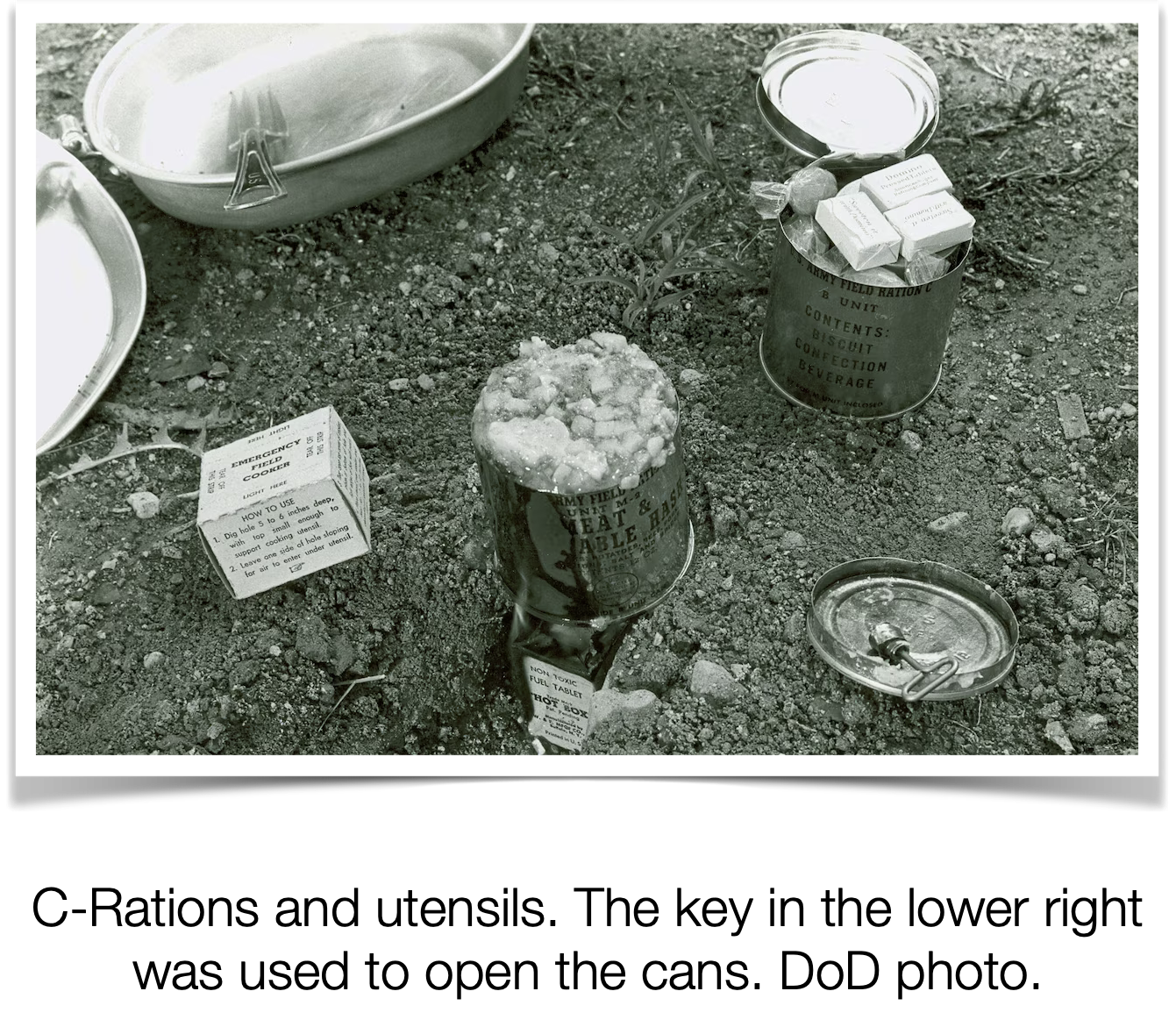
We got some C-rations and water and went back to our foxholes.5 The C-rations have some larger cans of food in them than the K-rations.
The weather is cool here at night, but I have a field jacket that keeps me warm.
Saturday, April 1
Another fellow and I had to go out in front of our lines tonight and be a listening post. We went out into no man’s land about 200 feet and crawled into shell holes and lay still because the Jerries sent up flares often.
To get out in front of our lines we had to go through a minefield that had a path marked off with toilet paper, and then through coiled barbed wire. Rain had about destroyed the toilet paper, but we got out there OK. If the Germans attacked we would be the first to be hit.
During the night the Jerries fired artillery and mortar fire at our lines, but most of them went over us. About 1 am we heard and saw dimly a German patrol in the distance from us. They appeared to be going toward their lines, so we lay quiet and didn’t give an alarm. As soon as it was getting light in the east we went back to our line.
I got two letters from home today.
Sunday, April 2
We usually stay in our foxhole during the daytime, but this afternoon Reynolds and I lay outside of our foxhole and watched our P-38s fly over the beachhead. They were attacked by some German planes, and a dogfight developed. The firing was very extensive, and once we had to get back into our foxhole to avoid beings hit by spent bullets. We could hear them hitting the ground around us. Reynolds and I were not assigned any duty tonight.
Monday, April 3
Reynolds and I talked quite a bit and I got to like him. Back in Pulaski, VA, he said he used to fight amateur fights, usually four-round or six-round fights. He said he won about all the fights. He did not fight professionally. He is well-built, and looks like an athlete.
Reynolds and I had to stand guard at a road tonight. Our sergeant said to shoot anyone who didn’t know the password. The sergeant said we might lose some friends, but we would kill a lot of enemy. Everyone that came up the road was our troops and knew the password. We have a new password each night.
I got two letters from Nettie tonight.
Tuesday, April 4
I got a letter from my sister Mary Ruth tonight. I was glad to hear from her.
Reynolds and I both had to carry up supplies from the trucks tonight. I carried a case of ammunition, and Reynolds had a can of water. As we were going back to our lines, we came under mortar fire at an intersection. The shells were coming close, so I set my box down and lay in the side ditch, but Reynolds kept going up the road. As soon as the shelling let up a little, I got my box of ammunition and ran and caught [up] with Reynolds. Reynolds said that it is usually better to go on and get out of the area when an intersection is under enemy fire.
Our line is under fire much of the time and some of our people get hit. But in our foxhole, we are reasonably safe from the artillery and mortar fire except from a direct hit. I am glad that I am just a private and not responsible for anyone else.
Tonight a rabbit was running around near my foxhole. Some of the fellows tried to catch it, but it got away.
The Germans sometimes make raids on our lines, but there haven’t been any near me yet.
Wednesday, April 5
Reynolds and I slept some, but we watched our spotter plane fly over no man’s land for several hours today. The spotter plane is a light plane that our artillery uses to spot enemy gun positions. When they spot a German gun position, they call in the position to our artillery, and we try to knock the German gun positions out. The Germans don’t usually shoot at the spotter plane because it darts around and is hard to hit, and to shoot at it would give away their gun position.
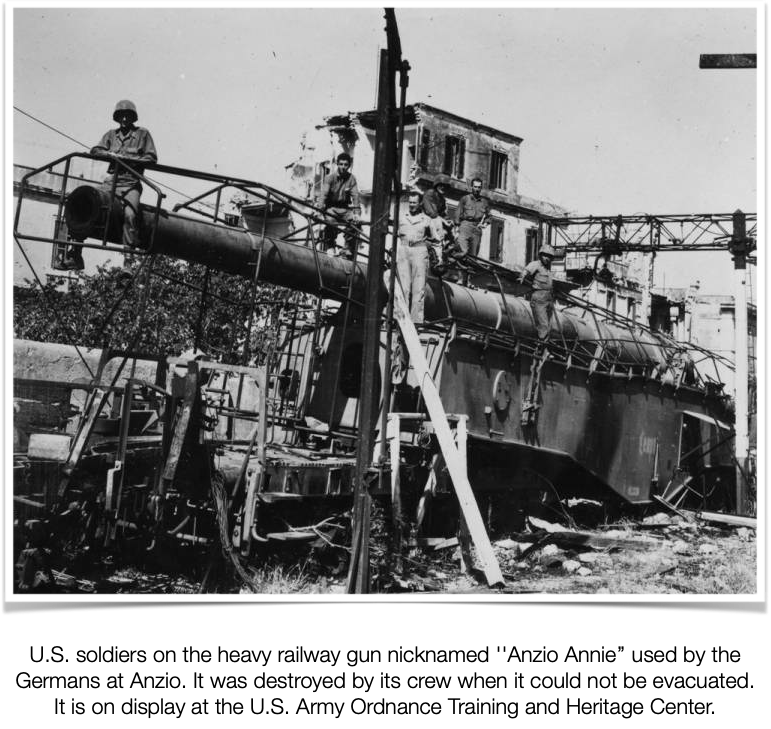
The German “screaming meemie” gun, sometimes called “Anzio Annie,” fires at us often. The “screaming meemie” is a large artillery gun on railroad tracks that can be run on a railroad track into a mountain near Rome. The Germans roll the “screaming meemie” gun out [of] the tunnel, fire it for a while, then roll it back into the mountain. This makes it hard for us to hit it. Much of the time the railroad gun is fired at us in the daytime. The “screaming meemie” makes a loud noise. When the shell is coming in, it sounds in the air like a truck changing gears. and the shell makes a larger hole than their other shells. Also, they have 88mm cannons that they rapid fire at us most every day. These cannons are above ground, and our artillery tries to hit them.
I had to help carry supplies up to our lines tonight. This time I carried a can of water from where the trucks stopped to our line. Another man was with me and carried rations or ammunition.
Since I have just joined this company. I don’t know the names of many of them. And we don’t have assembles. Most all call each other by their last names, probably because when the mail is delivered they usually just call the last name.
Thursday-Sunday, April 6-9
These three days (nights) I was on guard duty, carried water, ammunition, mail, or rations to our lines. I have noticed that these nights they seem to be firing 50-caliber machine guns at our roads and intersections. Twice as we were going through intersections we came under machine gun fire. Each time I just hurried on up the road. And they also send artillery and mortars [to] fire at us each night, and sometimes in the daytime. Their machine guns fire very fast, faster than ours. But that takes more ammunition, and it takes only one bullet to kill a man. And their 88mm cannons fire much faster than our 76mm canons.
The German machine guns fire a 31mm bullet. Americans fire a 30mm bullet. I am told that our guns will not fire the 31mm bullets. They jam up, and the shell casings will not eject from our guns. However, they can fire our bullets in their guns. The shells are a bit loose in the German guns but will fire.
Monday, April 10
Tonight, as it was getting dark, the sergeant came by and instructed me and another soldier that I didn’t know to be the listening post tonight. I had been on the listening post before, and I don’t like being out in front of our line in no man’s land. But orders are orders. Both of us had M1 rifles, and at dark we started out, careful to stay in the path through the American minefield that was in front of our line and was marked off with toilet paper. The path wasn’t clear. Rain had washed out much of the toilet paper, but I went first and we got through the minefield OK. But just beyond our minefield there was coiled barbed wire that we had to go through.
I got through the wire OK, and moved out about 50 feet when I heard quite a bit of noise back at the barbed wire. The soldier with me had gotten caught in the barbed wire. It scared me, so I slipped the safety off my M1 and looked toward the German line to see if they had heard the commotion. About 50 yards from me towards the German line a flare went up. It startled me, and I fired a shot right where the flare began and it hit the German that sent up the flare. I crawled into a shell hole and lay still. A flare will light up the battlefield for seven minutes. And during that seven minutes, the hit German called, cried, yelled, and made a lot of noise. I did not move or look up while the battle field was lit up as any movement would have brought bullets. I lay still about 2 or 3 minutes after the flare went out not sure what to do, and then I heard many German voices as they were trying to aid the hit German.
It was dark, but I decided we had better get back to our lines. I got through the barbed wire and ran as fast as I could toward our line. Our line was dug into the bank of a road, and I don’t remember looking for a path through our minefield, and I was running so fast that I fell off the road bank where we were dug in. I skidded across the road and ended up in the other side ditch, but I held onto my M1 rifle. The soldier with me was right behind me. My hands were skinned up some, but I crawled over to our line.
After a few minutes our sergeant came to where we were. “What’s going on?” he asked. “Well’ I said, “I guess I just shot the German that sent up that flare.” “What did you do that for? We thought we were being attacked.” the sergeant said. The purpose of the listening post was to alert our lines if a German attack occurred. “it startled me when the flare went up,” I said.” It was a reflex action.”
The sergeant talked with us about 15 minutes. My action had waked up the Germans, and they kept sending up flares and dropping mortar shells out in no man’s land. ”OK,” the sergeant said, “Wait one hour until it quiets down some. Then both of you go back out there.”
We waited about an hour and then went back out there. We got out there and got as low as we could and lay there. The Germans sent up flares often and dropped mortar shells around all night. When the flares lighted up the battlefield, we got as low as possible and did not move. They would have seen any movement. But other than the falling shells, nothing else happened.6
Tuesday, April 11
When we saw light in the east, we went back to our lines. When I got back to my foxhole, I told Reynolds what happened. He said he heard the shot. He was on guard duty. Later in the day, Bill Friedlander crawled over to our foxhole and I told him about the shot. He and Reynolds laughed at me for being so scared out there. And they were right, I was scared out there. This was the first time I had shot at a human being. And I felt bad about it even though he was the enemy.
Tonight I was on guard duty. Guard duty usually meant that we were out of our foxholes along our line ready to fire if the Germans attacked. The Germans had attacked our line in several places away from where I was. The Germans would quietly slip up on our lines and hit us quickly with machine pistol fire and mortars and then move back. They were usually looking for weak places in our line to attack. Our listening post were supposed to alert our lines when a German attack was coming.
Wednesday, April 12
I received 27 letters and a copy of the Tribune tonight. I sure am glad to receive the mail. I am sorry to hear that our former pastor Rev. Cummings is dead.
I had to go back and carry a ten-gallon can of water up to our lines.7 The cans were very heavy, but when I got them up on my shoulder I could carry them OK. At that time, I weighed about 185 pounds. and was very strong. But I always hurried through the road intersections.
During the daytime, we slept, talked, played 21 (a card game), and heated coffee on a stove made out of a ration can fueled with bacon grease. The ration truck would bring a supply of cigarettes. I don’t smoke, but most everyone else did. And the cigarettes traded well with the Italians.
Tonight I had to stand guard on a road near my foxhole that led into the German lines. No one came down the road.
Thursday, April 13
After daylight, I crawled over to the foxhole that Bill Friedlander was in. We talked a lot. He told me about working in a steel mill in Gary, Indiana. He told me about the hot furnaces in the steel mill. He said the work was hard, but it paid well.
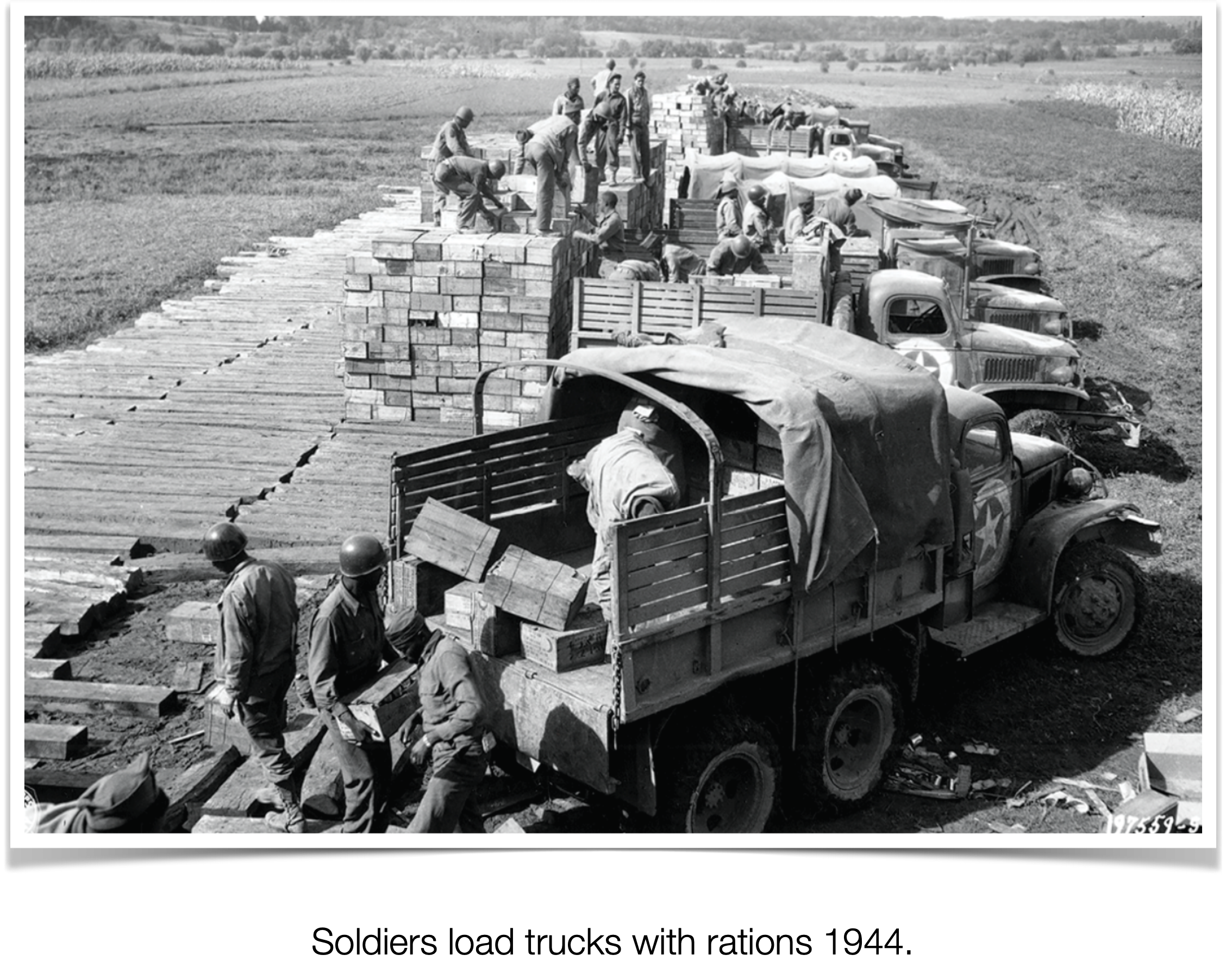
After a while, I crawled back over to my foxhole and went to sleep. We put a blanket on the ground when it wasn’t wet to sleep on. We had C- and K-rations to eat and water for our canteens. But most of us hadn’t bathed or shaved for several days. The company was letting a few soldiers go back to Anzio with the ration truck each night to a shower tent that was set up behind a hill.
We (we being me, Reynolds, Friedlander and three other soldiers) asked our officer if we could go back with the ration truck. He looked at us. We were a sorry-looking bunch, and he said we could go back for a bath, shave and clean up. So we went over to where the ration truck was, and when the truck left to go back to our camp, we were on it.
When we got there, we went to the tent that had cots and went to sleep. At daylight, we got up, went to the mess tent, and got a warm breakfast. It was good to have warm food again. Then we shaved and cleaned up. We went to the shower tent and had a long warm shower. They had clean clothes for us. It sure felt good to be clean again and have clean clothes to wear.
There were some barber tools there, so we proceeded to give each other a haircut. After seeing the haircuts we had, it was clear that none of us would do well in the barber business. But our hair was short.
Reynolds cut my hair, and I cut his. When I was cutting his hair he yelled “You are cutting my ear.” “No I’m not,” I said. “Yes you are,” he yelled. I looked close at my scissors in his long hair, and sure enough, I had his ear in the scissors. It didn’t bring the blood, but I am sure it hurt. I promised to be more careful and he let me continue cutting his hair. We were not going for looks, we just wanted our hair short.
We slept some during the day, but after dark when the ration truck was ready, we got on it and rode back to where it stopped. We got off the truck and carried rations and water to our lines. We were not asked to do guard duty.
Friday, April 14
We slept most of the day in our foxhole. Bill Friedlander crawled over to my foxhole and he, Reynolds, and I talked about home some. Reynolds and Friedlander are not married and are younger than I am. I am 24 years old as of March 27, 1944.8 That was the day we relieved the 3rd Division boys at the front. Yes, I went to the front lines on my birthday. I was 24 years old. Reynolds was in the replacement group that I was in, but I didn’t know him then. Friedlander has been on the front lines several months and has done a lot of fighting.
It sure is good to have two close friends up here, Reynolds and Friedlander. Friedlander is constantly giving me advice even though I am two years older than he is. I appreciate the advice about fighting and staying alive, but I have (in fun) started calling him dad when he starts giving me advice.
Saturday-Wednesday, April 15-19
Saturday I had to stand guard. Sunday I had to carry up a box of ammunition. Monday I wasn’t assigned any duty. So I wrote letters. Tuesday I carried up a can of water. Wednesday I had to stand guard.
Every day and night there is artillery, mortar, and machine gun fire coming in. And the German “screaming meemie” gun, sometimes called “Anzio Annie,” is active every night, and sometimes in the day hours. And of course, our artillery and mortars are firing back. In the daytime, we often lay outside our foxhole and watch our artillery spotter plane fly over the German lines. Usually, the Germans do not shoot at our artillery spotter plane as it would give away their position, and our artillery could then hit them.
Thursday, April 20
Many days Friedlander, Reynolds, and I will lay out of our foxhole and watch the planes flying over the battlefield, but when the spent bullets from a dog fights over the battlefield begin to land in our area we have to take cover.
Today while we were watching our artillery spotter plane fly over the battlefield, it was hit and went down. We learned later that it was accidentally hit by American artillery fire. The chances of that happening were very small. It was probably hit by artillery fire that the spotter plane was directing. I don’t know if the pilot survived.
Tonight I was assigned to guard the road that runs into the German lines. I had guarded this road before. About midnight I heard several people coming up the road in a trot. It was dark, and I couldn’t tell if they were friends or enemies until they were near me. I shouted, “Halt.” This startled them, and they jumped around and pointed their guns at me. I was laying in the side ditch and had my M1 ready to fire. They had on American uniforms. I said, “What is the password.” They knew the password and stopped and talked to me for a couple of minutes. They had been out on a patrol and had run into a German patrol. A firefight developed, but they managed to get back to our lines. This is why they were so nervous. I directed them to our CP.9
I received six letters from home at mail call tonight. They bring the mail around to our foxholes. I learned that Terry weighs 18 Ibs.
The weather here is very warm. It is a beautiful day except for the battle noise.
Friday, April 21
The fighting here at Anzio had turned into a stalemate, not unlike the fighting in World War I.10 But instead of trenches, we had foxholes. The Germans had the high ground. They were in the mountains surrounding Anzio. We had the level ground, and the Germans could see any activity we did in the daytime.
After dark, a lieutenant picked about 15 men from our platoon to go on a combat patrol into no man’s land and toward the German lines.11 Reynolds and Friedlander [and I} were in the group. We start up the road that I had guarded before toward the German lines. We hadn’t gone far when the lieutenant said, “We need a point.” Our sergeant looked back at us and said, “Cox take the point.” I knew what taking the point meant. Since I was tall, I was usually near the front of our squad, and I was easy for the sergeant to see.
I moved out about 100 feet in front of our patrol and kept my M1 at the ready. I moved slowly and quietly up the road. I looked back and the patrol was following me. I moved slowly and kept a sharp look at the road ahead and the roadside. I also listened very hard for any unusual sound.
We had moved up the road slowly for an hour or more when I heard a sound up ahead like metal on metal, like the cocking of a machine gun. I moved quickly and quietly to the side ditch. The patrol following my lead moved to the side ditch. I lay in the ditch a minute or so and nothing happened. I was about to stand up and get back on the road when a German machine gun opened up firing down the road. The tracer bullets looked like fiery balls going over our heads down the road, but none of our patrol were hit. As soon as the firing stopped, I started crawling down the side ditch toward the rest of the patrol. They were up and started moving quickly back down the road the way we came. After we had gone further down the road toward our line, I noticed the German machine gun was still firing burst down the road. When we got back to our lines, the lieutenant said, “We found them. I will call our artillery.”
Saturday, April 22
After we got back from the patrol, I had to carry a box of K-rations from the trucks to our lines. After daylight, Friedlander crawled over to my foxhole and we discussed the patrol last night. He said that if we had not gotten off the road when we did, we would have had some casualties. He also said the German machine gun tracer bullets looked like fiery balls floating by.
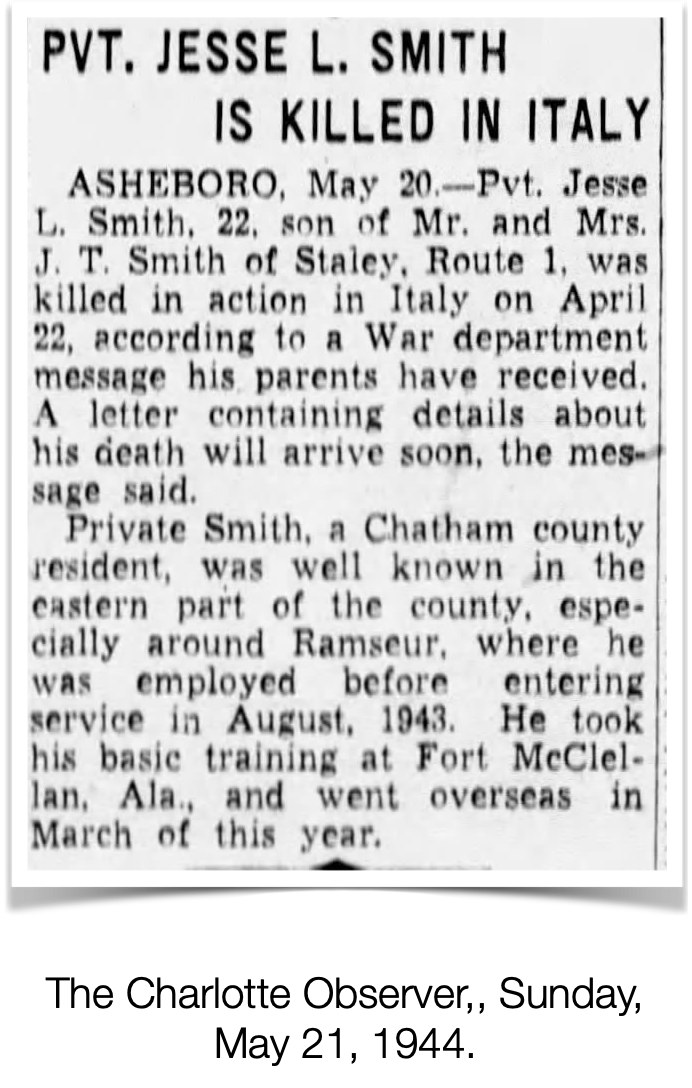
My friend from Siler City, Jesse Smith, was killed today.12 Apparently, he was hit by an artillery or mortar shell. Jesse was in my company, but he was in a different platoon. He was in our line down the road a ways from me. I hadn’t had a chance to talk to Jesse since we moved to the front line about a month ago.
I knew that we had been receiving some hits from the German artillery and mortar rounds since we went into the line. When the incoming began to fall around us, I got into my foxhole if I could. Sometimes I was on duty and couldn’t get in my foxhole, then I lay as low as I could get where I was. The members of my squad had some near misses, but we have not lost anyone.
Sunday, April 23
I received some pictures of Terry today. He sure looks healthy and is growing. I did not have much duty today. I wrote some letters and watched our P-38 planes fight with some German planes part of the day.
From time to time we receive some incoming mortar and artillery and have to get in our foxhole. Spent some time with Friedlander and Reynolds.
I had to help some fellows fill up sandbags this evening. I only had a small shovel, but we managed to find enough soft dirt to fill about 40 sandbags.
Monday, April 24
I had guard duty last night. And after I was relieved from guard, I had to carry a can of water from the trucks up to our lines. “Anzio Annie” was busy today. Some of the shells landed in our area. They sounded close, but none of our people were hit that I know of.
I try to write Nettie a letter every day while we are in the stalemate here. We have to stay in our foxholes during the daylight hours.
Tuesday, April 25
I received four letters from home yesterday. I am always glad to get mail. I do not know much about how the war is going. Sometimes someone has a copy of the Stars and Stripes Army newspaper, and I get to read it and learn a little.
Tonight a mortar shell landed near me and knocked me down. I didn’t get hit by shrapnel, but it was close. A mortar shell doesn’t give much warning. You will hear a shhhbang. It doesn’t give one time to take cover if there is any cover. This may be what hit Jesse Smith.
I had to stand guard tonight.
Wednesday, April 26
Tonight I learned that there is to be another patrol into the enemy lines. Most of my squad is in it. There [are] about 12 men in the patrol. We start out across no man’s land toward the German lines. A lieutenant is leading us. I am third man in the patrol. After we had gone a ways slowly and quietly, I noticed the lieutenant motioned to our sergeant and said “point.” The sergeant looked down our line and picked a man named Lipchez for the point.13 We all liked him because he could make a working stove out of a tin can, bacon grease, and a string for a wick. We used the stove to heat coffee down in our foxhole.
Lipchez was reluctant to be the “point,” but he slowly came forward. I could see in the distance that we were approaching some buildings that looked like a small town. The sergeant instructed Lipchez to move out in front of our patrol. He moved out, but I could see that he was scared, as I would be. Lipchez moved out about 100 feet from our front man. Suddenly Lipchez came running back to our patrol. He was saying, “I can’t see, I can’t see.” The sergeant asked, “You can’t see?” Lipchez said, “I can’t see. My eyes are crossed.” “Your eyes are crossed?” the sergeant asked amazingly. “Yes, I can’t see,” Lipchez said. The sergeant considered this for about half a minute, then he said to Lipchez, “You get the hell back up on that road and let us know if you see anything.” Lipchez slowly moved back up on point.
Thursday, April 27
We moved up the road and came to a small town. We stopped in the town square while our officers looked in some houses to see if any Germans were still here. The town was abandoned, but I felt like a target while we were standing in the town courtyard. Someone found a humorous sign in a foxhole, probably left by the boys that we replaced. The sign said:
“Trigger Happy Hotel, special invitation to men with itchy trigger fingers. Open 24 hours a day, special rates, three cans of C-rations each day, interesting rock beds, sandbag pillows, music nightly by the German machine gun trio, located on the road to Rome.”
Even though we are in danger, the boys joke with each other. But it occurred to me that I have been on the front lines today for a month.
When our Officers found that the Jerries had left, we pushed up some farther but returned to our area before daylight.14
Friday, April 28
Friedlander and I had to carry up supplies tonight. I had a case of C-rations and he carried water. It takes a lot of water and food to keep us going.
We are in a stalemate here in the fighting. I don’t know how long this will last. Many of the boys here believe that the invasion in France will be soon. I hope so. We also believe that we will try to break out of the Anzio beachhead soon. There will be much fighting when that happens. Also, the Germans may try again to push us into the sea. I don’t know what will happen but we are ready to fight.
We have a new password each night. The password is always something we are familiar with, but hopefully the Germans are not. Here are some passwords we use: Babe-Ruth, Betty-Grable, Tom-Sawyer, Clark-Gable. If you are challenging someone, you tell them to halt, and you say the first word of the password, and they should respond with the second word of the password for that day. If they do not know the password, cover them with your rifle and take them to our CP.
Saturday, April 29
These three days were like most of the other days, guard duty, carrying up supplies. I have learned to tell by the sound when an artillery shell will land close and take cover if any is available. Mortar shells come in quick and don’t make much noise before they explode.
The German 88mm cannon is superior to our cannons. They fire it fast, almost like a machine gun. And their machine guns fire much faster than ours.
Tuesday-Thursday, May 2-4 (There is no entry for April 30 and May 1)
Because the action is slow at the front, our officers are letting some of us go back to our base camp at Anzio for two days. Reynolds, Friedlander, and I are in a group that goes back tonight.
It was a good two days, warm food, showers, and clean clothes. We were able to go into Anzio some, but had to stay in the low areas.
There were several American vehicles at Anzio, and we saw one Jeep water boat. It could run on dry land, and go into the water and be a boat.
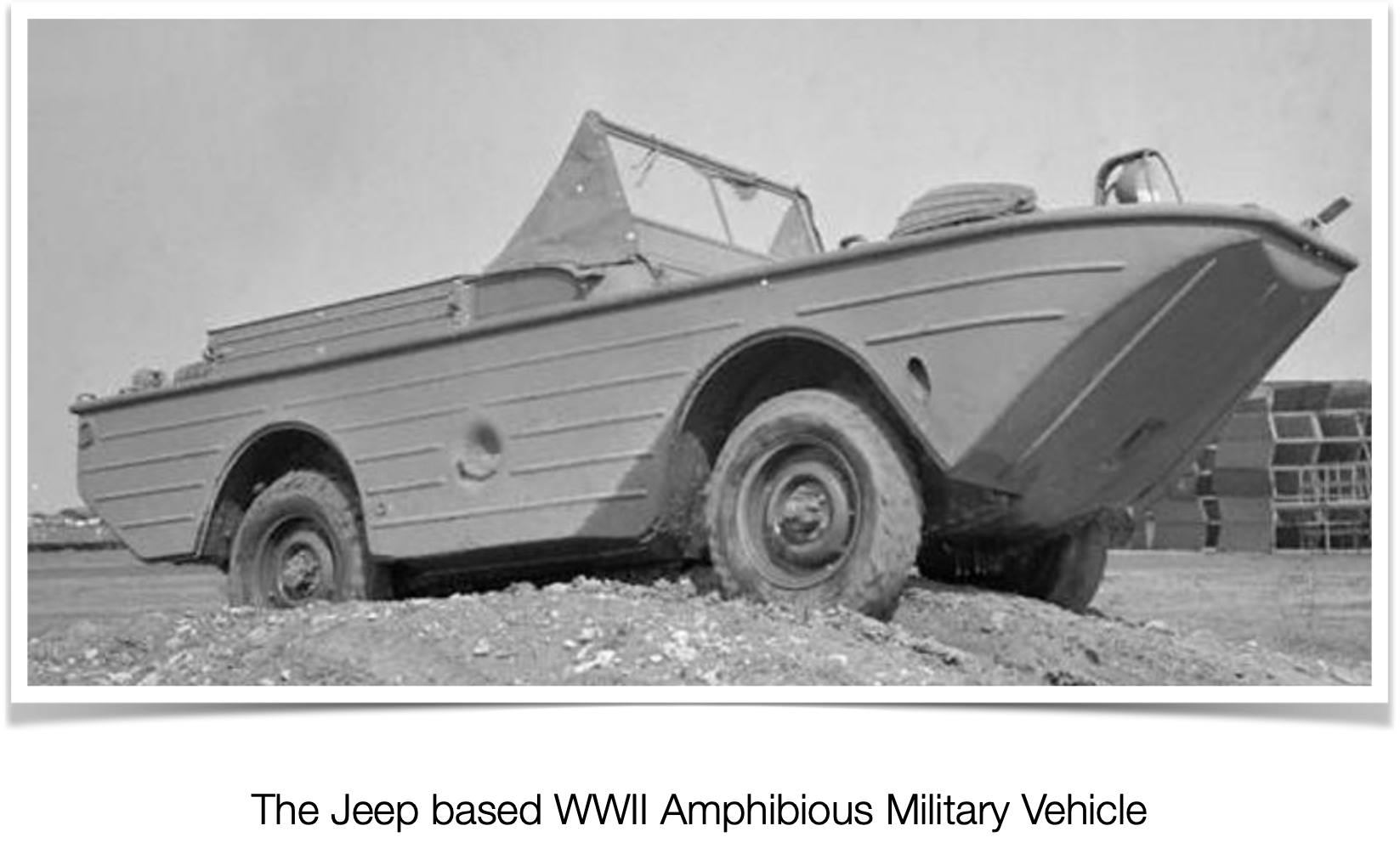
Wednesday evening we attended a protestant church service, no church. We gathered behind a hill for the service. But it was encouraging.
Thursday evening we were on the ration truck going back to the front. You guessed it, we had to carry food, water, and ammunition from the truck stop to the front. But the two-day vacation did much to build up our morale.
Back at the front, several letters were waiting for me.
Friday, May 5
The weather here is warm and sunny. Sometimes we have a shower of rain. But the war goes on. The incoming artillery and mortar is constant, and we often lose some people. Our P-38 planes fight with German planes most every day. But I believe we have control of the air.
I received two letters from Nettie tonight. They had been mailed earlier than some others I have received. But I am always glad to get mail from home. I have been on the front line for about six weeks now. I have had some near misses, but I am OK.
I had to carry supplies up from the trucks tonight. After that, I had to stand guard.
Saturday, May 6
The entire Anzio beachhead can be reached by German artillery and mortar fire, and also receives fire from “Anzio Annie” about every day. Our front line is some distance from the beach, and we are on level ground with the mountains near us being held by the Germans.
Tonight Friedlander and I were told to go with a 10-man patrol that was being formed to advance into no man’s land. We were told to advance until we located the Germans and to take prisoners if we could. I was sixth man in the patrol and had an M1 rifle. Friedlander was near me and had an M1 rifle.
They put a point man out, and we advanced toward the mountains. We moved slow and quietly. It was dark, but I could see a few feet ahead, and I kept watching the point man and the side ditch for a place to go if we came under fire. We knew the Germans were up ahead, but we did not know how far ahead they were. But we went farther than I thought we could go without making contact with the enemy.
Suddenly one shot rang out from the German side and our point man went down. Our officer and the front men began firing in the direction the German shot came from, and we received some incoming machine gun fire. I took cover in the side ditch and fired a clip of shots with my M1 toward the Germans. Friedlander also fired a clip of shots with his M1.
After about 5 minutes of heavy firing, I noticed that we were no longer receiving incoming fire. The Germans had pulled back. Our people also noticed that the incoming fire had ceased, and they soon quit firing.
Our officer and a field medic went to the aid of the downed point man. After a while, they came by where I was carrying the point man in a fireman’s carry (one arm over the shoulder of the medic), and brought the wounded man back by me. I don’t think the point man was hurt too bad because he was smiling when he came by me. I guess the thought of spending a few days in a warm hospital bed was something to smile about.
We did not chase the Germans as we only had a few men, and we did not know how many Germans there were. We went back to our lines.
Sunday, May 7
I did not have any duty today. Reynolds and I wrote some letters and lay out and watched the air battles. Our pilots are flying the P-38 and some other planes. I have seen some German planes go down, and I am quite sure we have air superiority over the beachhead. Sometimes we have to take cover when the spent bullets and shell casings land around us when there is an air battle.
Monday, May 8
The weather is warm here in the daytime, but cool at night. I have a field jacket and one blanket so I can keep warm when it is cool. We haven’t had much rain since I have been over here.
The fighting here now consists [of] incoming artillery and mortar fire, and sometimes incoming machine gun fire. We have some casualties. And of course, our artillery responds, and the shells usually come over us.
I had to carry a can of water from the supply trucks to our lines tonight. Then I had to stand guard. I received four letters and the [Asheboro Courier] Tribune at mail call tonight. And I will read the Tribune from cover to cover, and read the letters several times. I think often of Nettie and Terry. I miss them. Any news from home is welcome.
Tuesday, May 9
Even though the boys here are in harm’s way, they tell jokes and we laugh a lot. Here [are] some of them:
First German, “How are things up here this week.” Second German: “Oh, much better.” First German, “You mean better than last week.” Second German, “No. I mean better than next week.”
Have you heard about the guy who pushed a cow over a cliff just to hear the Jersey bounce? Or about the guy who took milk to the show because he heard there was a cereal on.
You can see that when you are in a place like this, it doesn’t take much to amuse us.
Wednesday, May 10
Today Reynolds and I were moved to another foxhole about 50 feet further up the line. There had been some artillery and mortar hits all along our area, but this foxhole was in good shape, [and] didn’t appear to have taken a direct hit. I am not sure what happened to the fellows who occupied this foxhole, but I was not happy being moved so far from Friedlander.
I received two letters from Nettie tonight at mail call, and a box of candy from Bossong Hosiery. Mail call consists of someone bringing the mail to our foxhole.
After dark Reynolds and I had to guard a road. This was a different road. We hadn’t guarded it before. The incoming enemy artillery was heavy. Reynolds found a place where we could see down the road, and we got in the side ditch and waited. The enemy artillery kept coming in, and one shell landed near us and a piece of shrapnel hit my leg. It was a piece of metal about the size of my hand and it landed flat. It hurt and I attempted to pick the shrapnel up, but it was hot. It burned my leg and my hand, but it didn’t break the skin.
This road ran toward the German lines, but no one came up the road while we were there.
Thursday, May 11
The 34 Infantry Division and my company fought in North Africa, Sicily, and now Italy. The soldiers who have been over here so long didn’t at first want to be close friends with the replacements. They said that it hurts worse when a friend is killed. Just do your job we were told. But I think we are being accepted more now.
I helped some fellows fill up sandbags this evening. We didn’t have any sand, so we filled them up with dirt. The dirtbags are placed over and around the foxholes. It doesn’t take much dirt to stop a bullet or shrapnel.
When I got to go back to the rest area for two days recently, I was able to get a supply of V Mail stationery and envelopes, so I try to write letters most days. The fellows here believe the fighting will increase very soon when we try to break out of the beachhead. Also, they believe the invasion will start soon. And while we are in Italy, and not France, we probably will be involved some way.
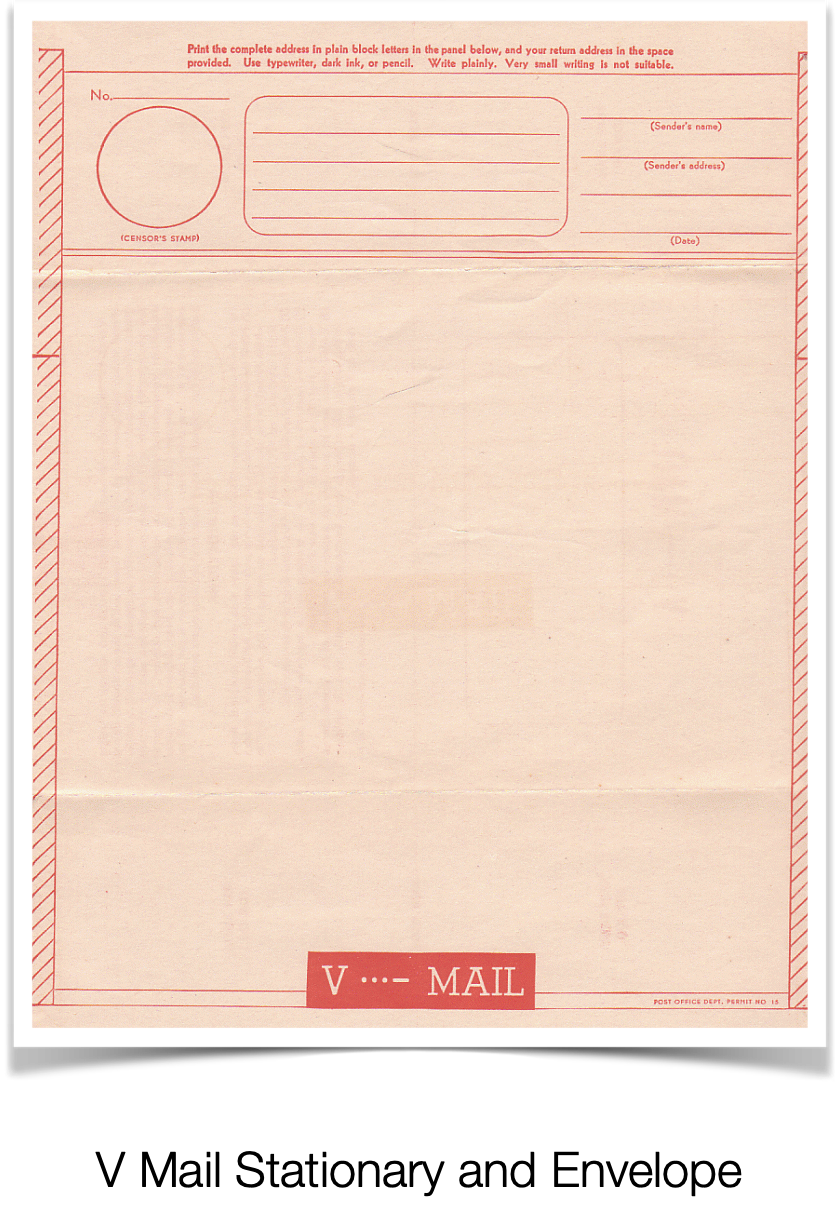
I had to stand guard tonight.
Friday-Monday, May 12-15
These days I did the usual things: stand guard, carry supplies, and try not to be where the shells land. Reynolds was hit by shrapnel and had to go back to the aid station. They patched him up and sent him back to our company. He wasn’t hit bad. You have to be hit very bad to get off the front line.
I got five letters from home and the Tribune at mail call tonight (Sunday).
Tuesday, May 16
Our platoon was organizing a 12-man patrol to go into no man’s land tonight and search for the Germans. I was not asked to go, and I was glad. However, my buddy Friedlander was in the patrol group.
I had to carry up a box of ammunition tonight. After I got back, I was placed on guard duty. Several enemy shells landed near me, but I was not hit. When I would hear the shells coming in, I would get in the side ditch near me. I have heard so many shells come in that I can tell if they are coming close.
Wednesday, May 17
I didn’t get any mail yesterday, so I am expecting some mail tonight. The mail seems to come in bunches. I think of Nettie and Terry a lot, and wonder if Terry can crawl yet. Nettie says that he is growing well, and is getting somewhat fat. I can tell by the pictures Nettie sends that Terry is doing well.
I did not have any assigned duty today, so I will try to write some letters.
Thursday, May 18
Tonight I was ordered to go along with another boy out in no man’s land on a listening post. I was very careful going through our minefield as the toilet paper marking the path through the minefield had been washed away by the rain. But the ones going through the minefield had made a little bit of a path. Several artillery shells landed near us out there, but when light appeared in the east we came back to our line.
When I get a chance to talk to some of the fellows, I learned that most of them believe the fighting stalemate we are in will not last much longer. And most of them want to end this war, and it doesn’t look like we are close to ending the war with a stalemate. They had rather break out of Anzio beachhead and try to move north. We lose some people often from the enemy artillery and mortar fire here. This is how my friend Jesse Smith was killed April 22.
Friday, May 19
Tonight I went to our supply truck and carried a can of water up to our line. As I approached one of the road intersections, I could hear machine gun bullets plopping into the dirt of the intersection. It sounded like the bullets were 50-caliber machine gun bullets. The Germans had this intersection zeroed in and were firing from their position on the mountains. I sat the water can down and got into the side ditch until the bullets let up some, and then I got my water can and went through the intersection as fast as I could. I got through OK.
When I got back to our line, I learned that Friedlander was on guard duty so, I joined him. In the morning, when it began to get light in the east, we went back to our foxholes.
Here is a poem that I put in my letter to Nettie today. Since I have had so many near misses on the battlefield, it is evident to me that I may not survive this war. This poem describes my sentiments about our son Terry exactly. Terry is about 7 months old now.
WHY I FIGHT
My heart and soul I consecrate,
My life to him I dedicate.
I fight for him. I fight that he,
May be what I had hoped to be.
I fight and pray that wars shall cease,
Then his shall be a world of peace.
His dreams, my dreams, and all his plans,
His name is Terry, my son, and every man’s.
Saturday, May 20
I got three letters yesterday. Getting mail makes my day.
It is raining here today. Last night our BAR man was hit by a German artillery shell. I don’t know how bad he was hit, but they took him out on a stretcher.
This morning the lieutenant came up to my foxhole and said we need a BAR man. He looked at me and said, “What is your name? I said, “My name is Elvin Cox, Sir.” He said, “Okay Cox, take the BAR.” I did not want the BAR. It weighed 21 pounds, and my M1 only weighed eight or nine pounds. But I did not have a choice.
I got my pack and other items and went down to the BAR foxhole. I took my M1 rifle with me. The foxhole did not seem to be damaged much. It had sandbags around it, including on the top. The BAR assistant gunner and ammunition bearer were there and we talked some.
I took the ammunition clip out of the BAR and looked it over. The BAR had a lot of grease on it. I pulled the trigger and the bolt slid forward. I am sure the BAR would fire. I cleaned some of the grease off and made sure the bolt would go forward. It did, and I put the ammunition clip back in.
I put the BAR on top of the foxhole ready to fire. I left it there when I was down in the foxhole. The end of the foxhole was open, so I could sit on the back edge of the foxhole and fire the BAR. But when I would hear an enemy shell coming in, I could quickly slide down into the foxhole. So when the shells cleared, I would come up and be ready to fire the BAR.

Sunday, May 21
My ammunition bearer said the wounded BAR man was out of the foxhole when he was hit. He also said that this foxhole seems to draw a lot of artillery and mortar fire. But the BAR man does not often have to carry water and ammunition up to the line, but he has to stand guard and is sometimes ordered to go with some patrols.
I got six more letters and the Tribune tonight when they brought the mail around. Also, I had to stand guard with the BAR. My ammunition bearer and I took turns standing guard. Several enemy shells came in, but we were not hit. The German “Anzio Annie” fires some shells most every night. Those shells are like a bomb and blow a big hole where they land.
Monday, May 22
I have been standing guard since dark. It seems that both our and [the] German artillery and mortar fire is heavier than usual. Some shells have landed close. It may be that the Germans have seen machine gun fire coming from this foxhole and have it zeroed in. The Germans have the nearby mountains and can see everything we do in the daytime. Perhaps that is how the BAR man got hit.
My assistant gunner and I spend most of our time in or near our foxhole. However, I went (crawled) up to Friedlander’s foxhole, and he and I and Reynolds had a long talk today. We all agreed that we probably would try to break out of the beachhead soon.
Footnotes:
- This is Pvt. William Orval Reynolds. It’s unclear whether he went by “Dave,” or Dad somehow made a mistake recording his name. Pvt. Reynolds was indeed from Pulaski (born 1924), and Paul Knitting Mill is recorded as his employer on his draft registration. The mill was a major employer in Pulaski, with socks and hosiery being among its products. Dad worked in a similar mill (Bossong) prior to being drafted. ↩︎
- Radium was used to illuminate the dials of watches for night viewing, hence “radium dial watch.” ↩︎
- The Lockheed P-38 Lightning was an American single-seat, twin engined fighter aircraft. ↩︎
- Ack Ack was the nickname given to the anti-aircraft guns. ↩︎
- C-rations were a pre-cooked, ready-to-eat canned individual meal. ↩︎
- This is a story my dad shared a number of times over the years. He said the sergeant was pretty mad. In his later years, dad said one of his recurring nightmares was the wounded German crying out for help in the night. ↩︎
- This was likely a 5 gallon can which would have weighed around 45 pounds if full. ↩︎
- Friedlander was born August 7, 1923. Reynolds was born December 13, 1924. ↩︎
- “CP” is the Command Post. ↩︎
- According to the Anzio Beachhead (22 January-25 May 1944) published by the War Department, “During March, all of April, and the first part of May 1944, recalled one veteran, the Anzio beachhead resembled the Western Front during World War I.” ↩︎
- Platoon and company raids were planned and carried out. Information of enemy activity, mortar and machine gun positions was secured. Counter-battery plans were drawn and used. Company patrols were sent out nightly probing enemy positions. Source: The 133rd Infantry Regiment’s WWII Narrative History for April 1944. ↩︎
- Jesse Lewis Smith was killed on April 22, 1944. He is buried in the World War II Sicily-Rome American Cemetery at Nettuno, Italy. Jesse was 22 years old. ↩︎
- Could be Lipchak, Lipshez, or Lipcheez. ↩︎
- On the night of April 27th the 1st and 2nd Battalions sent out platoon raiding parties. Numerous enemy machine gun positions were located. Enemy patrols were encountered, the 2nd Battalion party was fired on by enemy mortars and suffered 2 wounded and 3 men missing. Source: The 133rd Infantry Regiment’s WWII Narrative History for April 1944. ↩︎
 Diary of an Infantryman